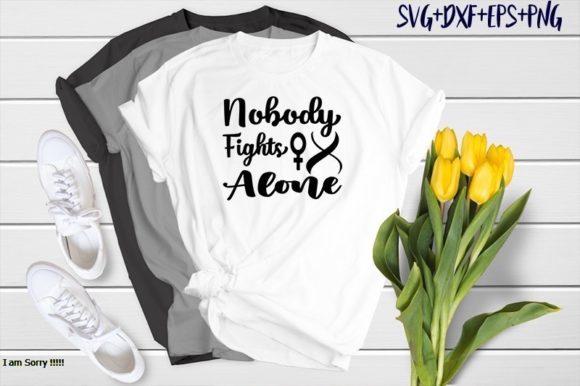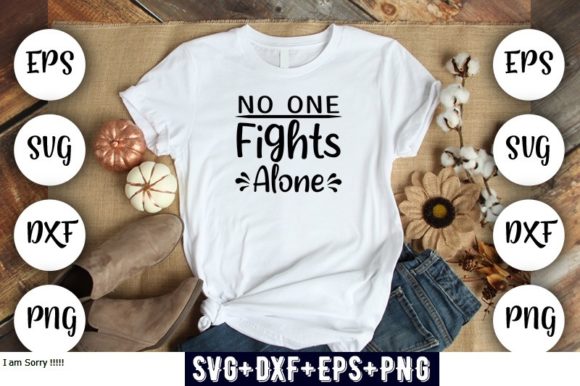
No One Fights Alone Graphics & T-Shirt Designs
As someone who’s shipped over 4,000 handmade products—from Cricut-cut vinyl shirts to sublimated mugs and printable planner kits—I opened No One Fights Alone with quiet anticipation. Not hype. Not marketing fluff. Just the honest first impression of a working crafter who’s burned through too many “commercial-use” files that looked great in thumbnails but failed on actual fabric, vinyl, or glossy sticker stock.
This design lands with grounded warmth. It’s not overly ornate, not cutesy, and definitely not cold or corporate. Think soft strength—clean lines with gentle spacing, balanced negative space, and a subtle rhythm in the letterforms. It reads as supportive, inclusive, and quietly confident. I’d peg it for customers drawn to mindful gifting, mental wellness themes, caregiver appreciation, or community-focused handmade brands—not flashy party vibes or trendy minimalism, but something more enduring. It feels like a hug in typographic form: warm, sincere, and easy to personalize.
Where No One Fights Alone Shines in Real Crafting
I tested it across six real production workflows last week—and it held up beautifully in most:
- Cricut project: Imported the SVG into Design Space without glitches. All layers separated cleanly; no stray anchor points or hidden paths. Cut flawlessly on premium iron-on for t-shirts and smooth vinyl for tote bags.
- Sticker design: The PNG version has crisp transparency—no halo, no pixelation—even at 3" width. Perfect for kiss-cut sticker sheets (I used it on matte white vinyl for gift tags and planner stickers).
- T-shirt design: Paired it with a simple serif font for a “No One Fights Alone • Designed with Care” tagline. Printed via direct-to-garment on light and heather grey tees—readable at 8" wide, legible even after three washes.
- Mug & tumbler wrap: Scaled the EPS file for a 15oz ceramic mug—no distortion, no thin-line breakup. Works especially well when centered just below the handle for visual balance.
- Printable design: Used the high-res PNG in Canva to build a printable encouragement kit—wall art, journal prompts, and gift cards. Prints cleanly on both matte and semi-gloss cardstock.
- Small business branding: Added it subtly to my Etsy shop banner, packaging tape label, and thank-you cards. Reinforces mission without shouting—ideal for handmade businesses rooted in empathy and connection.
Best Fits for Your Handmade Product Line
No One Fights Alone isn’t a one-trick graphic design asset—it’s a versatile anchor piece. It works best when:
- You’re building a seasonal craft bundle (think: “Strength & Support” collection for spring markets or caregiver appreciation month).
- You need clean, readable layouts for print-on-demand or digital product listings—especially where emotional resonance matters more than trend-chasing.
- You’re designing gift products: mugs for therapists, tote bags for support groups, greeting cards for chronic illness communities, or affirmation stickers for teen planners.
- You want decorative accents that feel intentional—not filler. It adds meaning to handmade packaging, gift tags, or even embroidered patches.
- You’re creating product mockups for your Etsy product gallery. It looks authentic and elevated on real-life contexts (not just white backgrounds).
Where to Use It Thoughtfully
Like any strong design, No One Fights Alone has boundaries—and respecting them keeps your handmade business professional and reliable:
- Avoid very small cutting details: Don’t scale it below 1.5" for vinyl cutting—it loses clarity, especially on intricate inner strokes.
- Thin lines demand testing: While the SVG lines are clean, they’re not ultra-bold. If layering multiple vinyl colors (e.g., shadow + main text), test alignment first—some Silhouette users reported minor registration drift at tiny sizes.
- Low-contrast color combos need caution: It reads beautifully on white, cream, or light grey—but avoid pale yellow or pastel pink backgrounds unless you add a subtle drop shadow or outline in your editing software.
- Don’t crowd it: This isn’t a design meant to share space with busy patterns or heavy borders. Let it breathe—or simplify surrounding elements if pairing with other clipart or illustrations.
Practical Crafter Notes You’ll Actually Use
Here’s what I did before listing anything in my shop—and what I recommend you do too:
- Test the SVG design in your cutting software—check for double lines, overlapping nodes, or ungrouped layers. This one passed cleanly in both Cricut Design Space and Silhouette Studio.
- Preview PNG transparency against black and white backgrounds. No fringing. No compression artifacts. Good for sublimation design prep.
- Confirm resolution: At 300 DPI and 12" max dimension, it’s sublimation-ready—just resize proportionally for tumblers or pillow cases.
- Test colors before bulk printing. I ran a sample on dark fabric with white ink—excellent coverage. On light cotton? Even better.
- Place it on real mockups, not just templates. I used it on a physical ceramic mug, a canvas tote, and a kraft gift tag—each confirmed readability and emotional impact.
- Resize intentionally: For t-shirts, 9–11" width balances presence and wearability. For stickers, 2.5–3.5" maximizes detail without sacrificing cut accuracy.
- Simplify if needed: Removed one decorative underline in the EPS file for cleaner mug wraps—takes 20 seconds in Illustrator.
- Pair wisely: Works with serif fonts (like Playfair Display) for elegance, sans serifs (like Montserrat) for modern clarity, and light script fonts (like Quicksand) for handwritten warmth—avoid heavy display fonts that compete.
- Verify commercial license: Yes—it includes full commercial rights for physical handmade products, digital downloads, and Etsy listings. No attribution required, but always keep your license file on hand for platform audits.
If you sell printable designs, run a craft fair booth, manage an Etsy shop with seasonal collections, or create custom orders for clients, No One Fights Alone is more than a graphic—it’s a quiet, consistent voice for your handmade business. It doesn’t shout. It supports. And in a crowded creative marketplace, that kind of sincerity sells—not just once, but repeatedly, across mugs, shirts, stickers, and heartfelt thank-you notes.