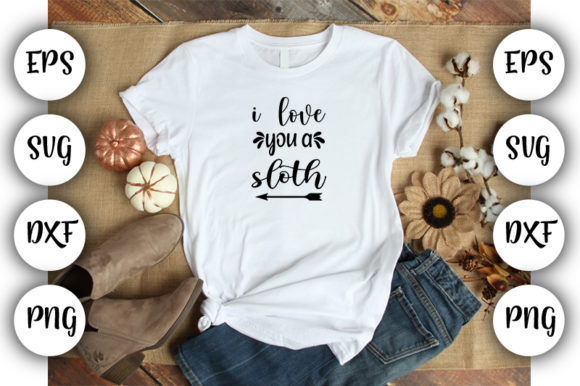
Valentine’s Design: I Love You a Sloth
A Sloth That Stitches Like It Means It
First impression? This isn’t just another cutesy Valentine’s graphic — it’s a gentle, grounded little moment of affection. The sloth hangs relaxed but intentional, arms wrapped around the phrase “I Love You” in soft, rounded lettering. There’s no frantic energy here, no over-the-top hearts or glitter explosions. Instead, there’s warmth, sincerity, and quiet charm — exactly what makes this design stand out in a sea of generic holiday graphics. As someone who’s stitched hundreds of Valentine’s pieces for boutique clients and Etsy shops, I immediately pictured it on a heavyweight organic cotton tote bag — the kind that holds baby blankets, farmer’s market hauls, or handmade gift sets. It feels personal, not promotional.
Where This Design Truly Belongs
Valentine’s Design: I Love You a Sloth shines brightest where handmade intention matters most. Think embroidered sweatshirt cuffs for new parents (a subtle nod to slow, loving care), tea towel hems for kitchen gifting, or pillow covers for nursery decor. It works beautifully as an embroidered patch — especially when fused onto denim jackets or canvas backpacks — because its clean silhouette holds up well at 3–4 inches wide. For small business owners, it’s a quiet brand-builder: imagine it stitched beside a logo on an apron for a cozy café or bakery. Its gentle personality also makes it ideal for baby embroidery — think onesies or burp cloths — where delicate scale and low stitch density are non-negotiable. And yes, it fits T-Shirt Designs category expectations, but only if applied thoughtfully: best on mid-weight or heavyweight tees with minimal stretch, not thin jersey or performance fabric.
Real-World Embroidery Considerations
This isn’t a “drop-in-and-stitch” file for every surface. On curved areas like caps or hats, the sloth’s rounded limbs and compact lettering hold up better than sharp-cornered fonts or sprawling layouts — but you’ll still want to test hoop placement carefully. On textured fabrics like terry cloth or bouclé, simplify your expectations: fine details in the sloth’s face or letter curves may soften during stitching. For dark fabric, avoid light thread unless you’re using high-contrast stabilizer underneath — the design’s modest fill areas won’t overpower shadow. And on stretchy knits? Proceed only with cutaway stabilizer and reduced top tension — otherwise, those satin-stitched outlines risk puckering.
What to Watch For Before You Stitch
- Small details matter: The sloth’s eyes and tiny claws are charming, but they rely on precise digitizing. Check your embroidery file closely — if those elements are under 1.5mm tall, they may vanish on low-density machines or dense fabric.
- Letter spacing is forgiving — but not infinite: “I Love You” uses open, friendly kerning. That helps readability at smaller sizes, but don’t shrink it below 2.5 inches wide without verifying legibility in your test run.
- Stitch density isn’t specified — so test it: Run a sample on scrap fabric matching your final project (e.g., fleece for a sweatshirt, twill for a patch). Look for thread buildup in the sloth’s curled tail or tight letter corners — excess density causes stiffness and wear.
- Hoop size is your silent partner: Even though the design looks compact, allow at least 1/2 inch of breathing room around the outer edge. Tight hooping distorts the sloth’s relaxed posture.
How It Shapes Your Finished Product
Valentine’s Design: I Love You a Sloth elevates perceived value by leaning into authenticity — not trend-chasing. Customers respond to that. A customer buying a hand-embroidered baby blanket with this motif doesn’t just get a gift; they get a story — one about patience, tenderness, and unhurried love. That translates directly to trust and repeat business. For Etsy sellers, it supports cohesive branding: pair it with neutral thread palettes (oatmeal, slate, moss) and natural fiber products, and you’ve got a quietly confident shop aesthetic. It also photographs exceptionally well in printable mockups — soft shadows, balanced negative space, and clear focal points make it easy to showcase across digital listings and social previews.
Practical Designer Notes You’ll Actually Use
- Always test on scrap fabric *first* — especially if stitching on blends, textured weaves, or layered garments like reversible totes.
- Check thread color contrast on both light and dark backgrounds. A warm charcoal thread reads beautifully on cream linen but disappears on navy.
- Review stitch density visually — zoom in on your embroidery software. Look for overlapping fills or excessive underlay in the sloth’s body contour.
- Confirm hoop compatibility before production. If your smallest hoop is 4x4”, this design fits comfortably — but double-check the bounding box in your SVG or EPS preview.
- Inspect corners and curves in black-and-white mockups. Does the shape read clearly without color cues? It should.
- Use appropriate stabilizer: tear-away for stable wovens, cutaway for knits or stretchy items, and fusible for patches.
- Verify licensing before selling finished items or bundling the digital embroidery file. Since this is distributed as SVG, DXF, EPS, and PNG, confirm whether commercial use is permitted — many Graphics files require separate licenses for resale.
Final Thought: Not Just Cute — Consistently Crafted
Valentine’s Design: I Love You a Sloth earns its place in my working library because it balances whimsy with wearability. It’s not trying to shout — it invites leaning in. That makes it unusually versatile: equally at home on a toddler’s bib, a therapist’s office pillow, or a small-batch candle shop’s gift wrap. As a machine embroidery design, it respects fabric, thread, and time — which means less rework, fewer customer returns, and more joyful making. Whether you’re prepping for craft fairs, building an Etsy collection, or fulfilling custom apparel orders, this is one of those rare designs that feels like a collaboration, not just a download.