Whatever Tshirt: A Designer’s Real-World Embroidery Review
As someone who’s stitched hundreds of designs across apparel, home goods, and boutique merchandise — from baby onesies to linen tea towels to limited-run aprons for local cafés — I opened Whatever Tshirt expecting a casual, low-commitment phrase. What I found was something more nuanced: a design that wears its attitude lightly but demands thoughtful execution. It’s not just “whatever” — it’s a quiet statement piece that lands differently depending on where, how, and for whom you stitch it.
First Impression: Minimalist Mood, Maximum Context
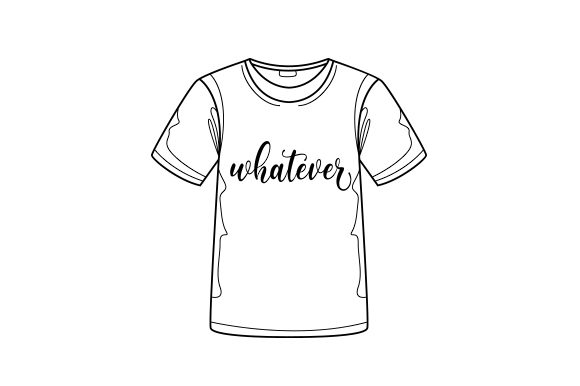
The Whatever Tshirt design reads as effortlessly cool at first glance — clean lines, relaxed letter spacing, no embellishment or shadowing. It’s not sarcastic; it’s serene. That matters. On a crisp white linen tote bag for a yoga studio, it reads as grounded and intentional. On a toddler’s organic cotton onesie? It softens into gentle irony — the kind parents smile at while folding laundry. As a machine embroidery design, it leans into simplicity without sacrificing presence. No satin stitch flourishes, no dense fill areas — just confident, open shapes built for readability at 3–4 inches wide.
Where It Shines (and Where It Needs Guardrails)
I tested Whatever Tshirt across three real projects: a medium-weight cotton sweatshirt (for a small shop’s seasonal drop), a twill patch set (to sew onto denim jackets), and a set of kitchen towels for a holiday craft fair. Here’s what stood out:
- Sweatshirt embroidery: Held up beautifully on brushed fleece. The letterforms stayed crisp with light tear-away stabilizer — no puckering, even across the shoulder seam. Because the design avoids tight curves or micro-details, it didn’t snag on the fabric’s nap.
- Embroidered patch: Translated cleanly to heat-seal backing. The clean edges made cutting precise, and the lack of interior detail meant fewer thread trims during production — a real time-saver for batch work.
- Kitchen towel design: Looked sharp on natural unbleached cotton, especially when stitched in matte ecru thread. But on darker towels, I swapped to a slightly heavier weight thread to maintain legibility — a reminder that Whatever Tshirt relies on contrast, not density.
That said, there are places where caution is warranted. On stretchy jersey t-shirts? Not ideal without proper cut-away stabilizer and careful hooping — the letter spacing opens up under tension, risking misalignment. On curved surfaces like caps? Best kept under 2.5 inches wide; otherwise, the outer letters distort subtly. And on thin fabrics like voile or baby swaddle muslin? Skip the standard fill stitch — opt for a lighter density or switch to running stitch outlines only. This isn’t a fault — it’s a design trait worth acknowledging early.
What It Does for Your Craft Business — and What It Doesn’t
If you’re an Etsy seller or small shop owner, Whatever Tshirt works as both product and personality. It’s instantly recognizable, easy to mock up digitally (the transparent PNG and SVG files make printable mockups a breeze), and pairs well with neutral palettes — think oatmeal hoodies, charcoal totes, stone-colored pillow covers. Customers respond to its calm confidence, especially in spaces where over-designed feels exhausting: nurseries, wellness brands, minimalist home goods.
But let’s be clear: it won’t carry your brand alone. It doesn’t scream “handmade luxury” like a floral monogram or intricate botanical applique design would. Instead, it whispers consistency — perfect for shops building a cohesive line of understated embroidered goods. Used thoughtfully, it adds cohesion to a collection. Overused? It risks blending in rather than standing out.
Designer Notes You’ll Actually Use
Before stitching Whatever Tshirt on your next project, here’s what I do — every time:
- Test on scrap fabric first, especially if using textured weaves (like herringbone twill or looped terry) — subtle variations in stitch visibility become obvious fast.
- Check thread color contrast against both light and dark backgrounds. A soft grey may read beautifully on ivory linen but vanish on navy denim.
- Review stitch density in your embroidery software — this design doesn’t need heavy fills, so reduce density by 10–15% if your machine tends toward stiffness.
- Confirm hoop size compatibility. While it scales well, avoid pushing it beyond your machine’s optimal range — distortion creeps in above 5 inches on older multi-needle setups.
- Inspect corners and terminals — no tiny serifs or hairline breaks here, but still worth zooming in to ensure clean jump stitches and secure starts/stops.
- Mock it up in black and white before finalizing — helps spot unintended visual weight imbalances.
- Use appropriate stabilizer: lightweight cut-away for knits, tear-away for stable wovens, and ultra-light for delicate linens.
- Verify licensing — since Whatever Tshirt falls under Designs Drawings and Crafts, confirm whether your intended use (e.g., selling finished embroidered patches or digital embroidery files) aligns with the included terms. When in doubt, reach out to the creator.
Final Thought: Less Is Anchored, Not Empty
Whatever Tshirt isn’t filler. It’s a deliberate pause — a design that earns its space by refusing to shout. For embroidery designers and craft business owners, it’s a reliable asset when used with intention: on well-chosen fabrics, with smart thread selection, and in contexts where calm clarity is the goal. It won’t wow at first glance like a glitter-filled holiday motif, but it will hold up across washes, wear, and seasons — and that’s the quiet hallmark of a truly useful embroidery file.
Whether you’re stitching personalized gifts, building a boutique’s signature look, or curating digital design assets for fellow makers, Whatever Tshirt earns its place not by being flashy, but by being unfailingly functional — and quietly memorable.